How Much Coffee Goes into Hong Kong Yuanyang, Hot or Chilled?
Our hot and chilled yuanyang use different cups. They take exactly the same pour from the coffee pot.
Lay the hot and chilled yuanyang recipes next to each other and the cup sizes suggest two different orders. The hot recipe names a 360 mL cup. The chilled one names a 350 mL cup. Yet a barista measuring out the tea and coffee could start either order with the same two measures.
| Per drink | Hot | Chilled |
|---|---|---|
| Prepared tea base | 120 mL | 120 mL |
| Prepared coffee base | 100 mL | 100 mL |
| Evaporated milk | 120 mL | 120 mL |
| Sugar | about 14 g | about 18 g |
In our Hong Kong drinks workbook, the hot version starts with the milk in the cup. For the chilled version, the sugar dissolves in the tea and coffee first. The milk goes in next, then the drink is chilled. The listed cup sizes identify the service vessels.
If you are costing a ten-drink tasting, even a last-minute change from five hot and five chilled to ten chilled leaves the coffee requirement at one litre before losses. With the same prepared coffee base, the coffee portion costs the same in either drink. Price the 100 mL of prepared coffee that goes into each cup. Record the sugar and the work of chilling separately.
What does that pour cost in ground coffee?
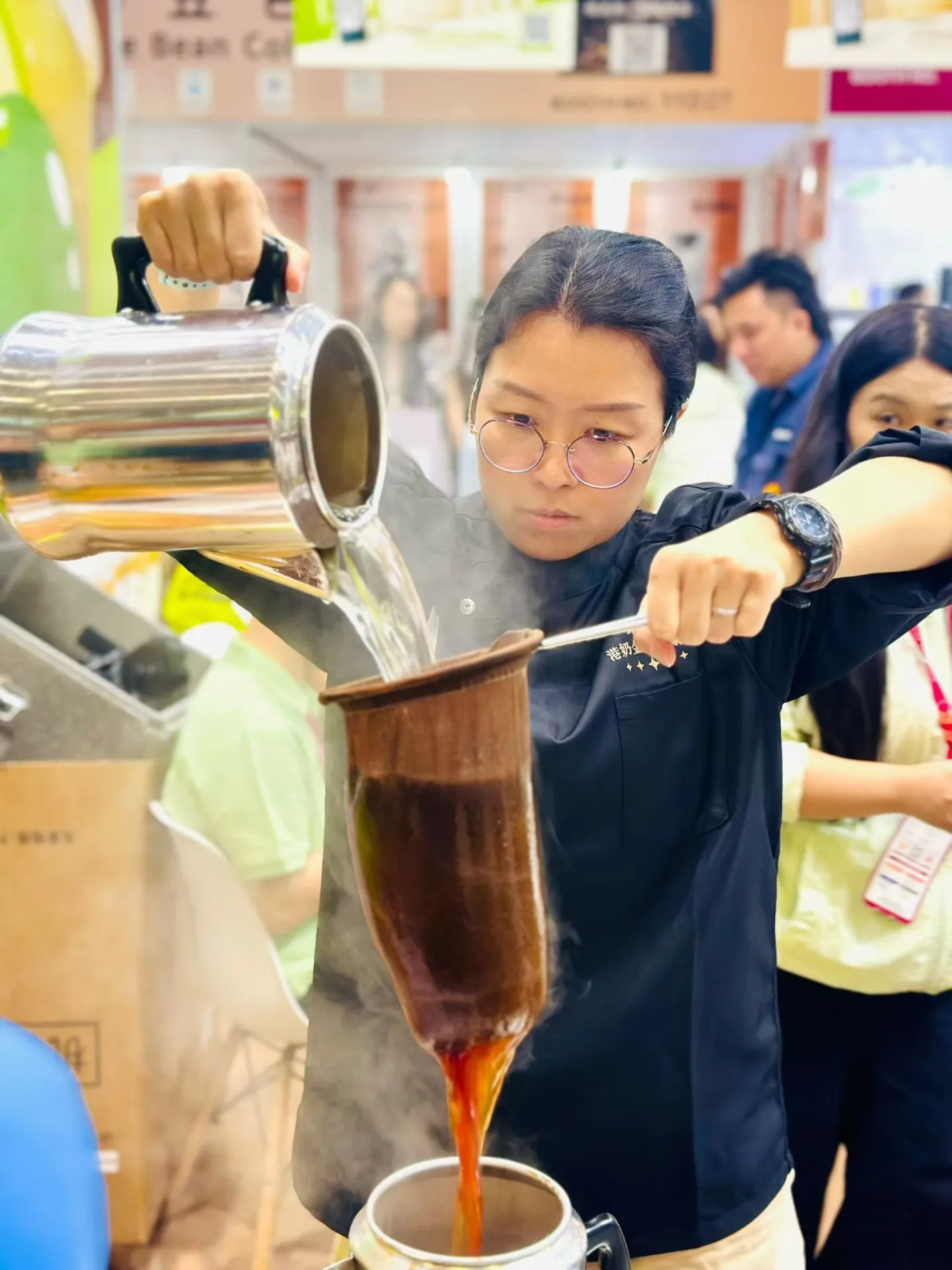
Our machine recipe starts with 400 g of ground coffee and 5 L of water. The useful figure for your order sheet comes at the other end of the brew: how much coffee is there to pour? Measure the usable coffee from one batch in millilitres. Divide what you paid for the 400 g of grounds by that volume, then multiply by 100. That gives you the cost of the grounds in one yuanyang, whether you serve it hot or chilled.
Planning a hot and chilled yuanyang trial? Tell our export team which coffee base you already serve so we can discuss a tea sample for the blend.
Email bruce@yuanjingroup.com · WhatsApp / WeChat: +86 130 7163 2772
More from the journal
Hong Kong Milk Tea vs Iced Lemon Tea: Where the Ice Goes. See where chilling fits into two neighbouring recipes from the same workbook.