Five Label Decisions for Bottled Tea Entering the U.S.
One formula feeds several parts of a U.S. tea label. Follow it from the ingredient list to allergen wording, Nutrition Facts, net contents and the business named on the bottle.
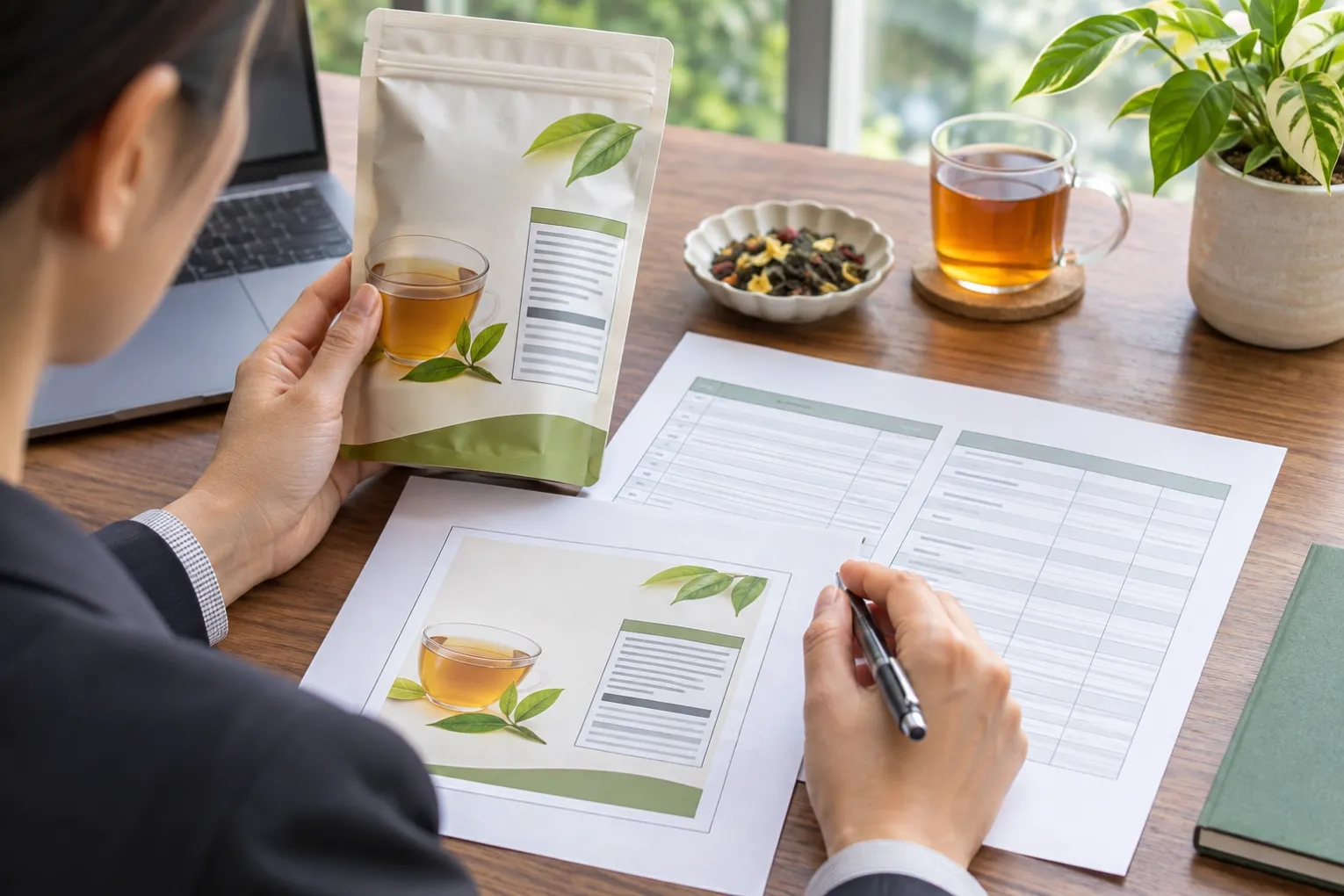
For buyers reviewing a U.S.-bound label
A coconut ingredient can belong in the ingredient list and still stay out of the major-allergen statement. That small distinction matters when a bottled tea label is prepared for the U.S.
Start with the drink inside the bottle
For a ready-to-drink tea sold at retail, the ingredient declaration starts with the formula for the finished drink. List ingredients by their common or usual names in descending order by weight, subject to applicable exceptions. If a fruit preparation has several ingredients of its own, carry its component information into the label review. A flavour name on the front tells you little about that order.
Read the allergen wording alongside the ingredients
FDA’s allergen labeling FAQ gives coconut as an example. Coconut used as an ingredient generally appears in the ingredient list. FDA excludes it from its current list of tree nuts treated as major allergens, so it does not belong in the federal “Contains” statement.
For a milk tea, the source matters. FDA’s interpretation includes milk from goats and sheep. Use the applicable source name. If the label uses a “Contains” statement, account for every major allergen present as an ingredient. An advisory about possible cross-contact serves a different purpose. FDA advises against pairing “Contains” and “may contain” for the same allergen.
Set the serving basis for Nutrition Facts
A nutrition specification expressed per 100 mL still needs to be matched to the applicable U.S. serving size, servings per container and rounding rules. Check the finished retail bottle size before laying out the panel. FDA’s food labeling and nutrition resources cover current Nutrition Facts requirements.
Use the volume of the retail unit
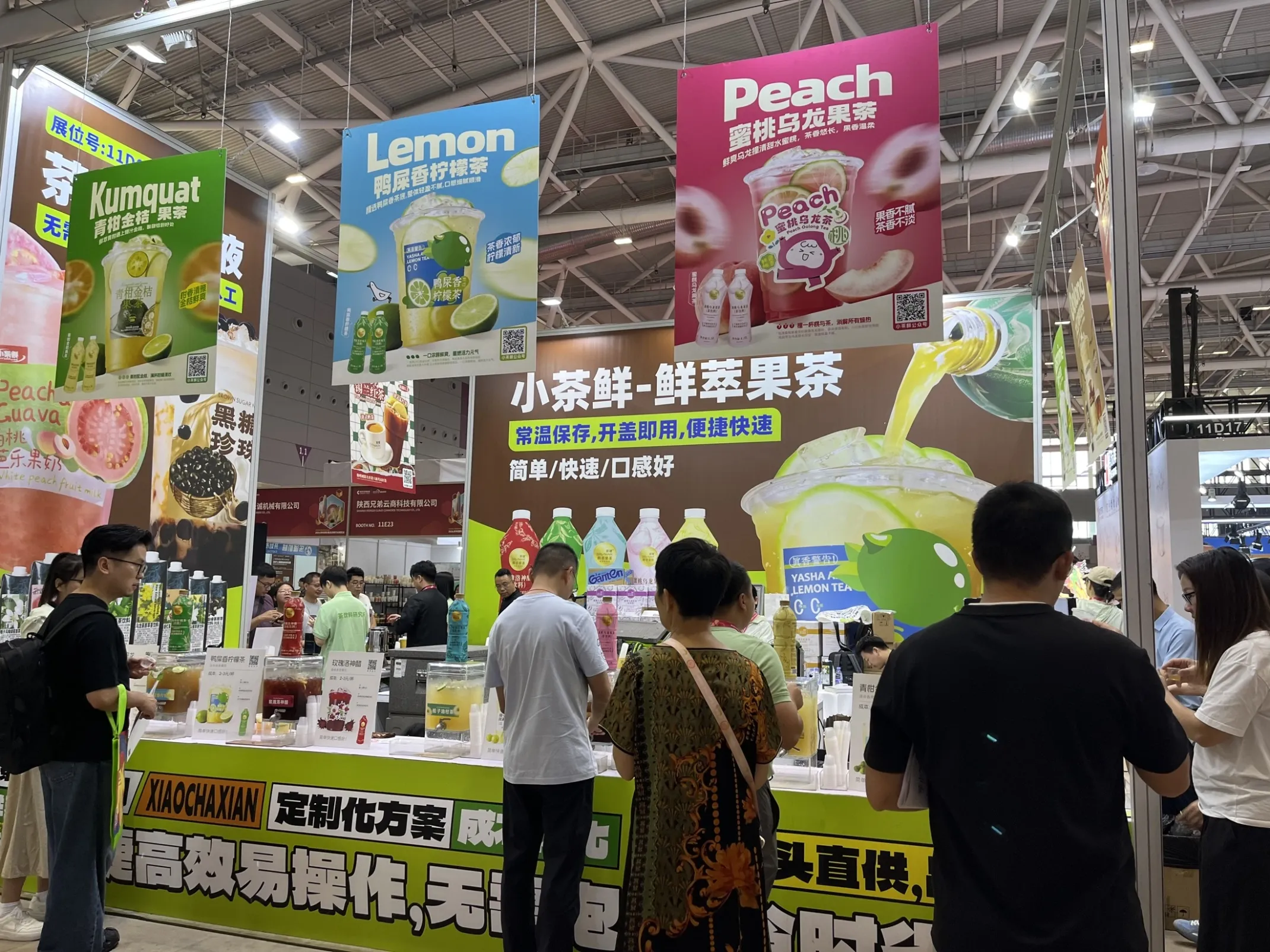
Our peach oolong shipping case contains six 1.5 L bottles. The nine litres describe the case. For the net contents of an individual retail bottle, start with 1.5 L and prepare the required U.S. customary and metric declaration on the principal display panel. Use fluid measure for the beverage. See the U.S. food labeling regulations.
Identify the business and the country of origin
The manufacturer, packer or distributor identified on the label needs the applicable name and place of business. If a distributor is named, wording such as “Distributed by” explains its role. Country-of-origin marking answers a separate question for the ultimate purchaser. A U.S. distributor’s address alone does not tell the reader where the product originated. See CBP’s country-of-origin marking rules for requirements and exceptions.
Before ordering the next print run
If you’re ordering a new run of U.S. labels, give your importer the artwork for the bottle you actually plan to sell. FDA set 1 January 2028 as the general compliance date for final food labelling rules published in 2025 and 2026. Existing requirements still apply, and an individual final rule can set a different date. Before you commit to a print quantity, ask which rule affects this bottle and when the revised label has to be in use.
For a U.S.-bound tea project, send the product name, intended market and current label draft to Yuanjin’s export team at bruce@yuanjingroup.com or WhatsApp/WeChat +86 130 7163 2772 so the right product documents can be matched to the discussion.
FDA’s FAQ page was updated October 29, 2026. Recheck the current FDA guidance and obtain qualified U.S. regulatory review before approving a commercial label.